Module 6 · Relationships 101
Module 6: Know What to Look For
The last two modules covered forms of abuse, identity-specific tactics, and the patterns of power and control that define the abusive end of the continuum. Now we bring it back to the skills you built in Modules 2 and 3, because recognizing early when something is shifting, and having the tools to act on that recognition, is what prevention looks like in practice.
How Abuse Develops: Early Warning Signs
Abuse usually doesn't start with a big, obvious incident. It builds slowly. Early on, warning signs can be easy to dismiss or mistake for something else. It builds slowly, which is part of what makes it so hard to name in the moment.
It's also important to say this clearly: one warning sign does not mean a relationship is abusive. A partner who gets jealous once, or a friend who makes a dismissive comment about your identity, is not necessarily on the abusive end of the continuum. What matters is whether these things become patterns. Do they repeat or intensify? Over time do they start to feel like control rather than isolated moments?
With that in mind, here are some early signs worth paying attention to:
Early warning signs might include:
Extreme jealousy that's framed as love or devotion.
Moving very fast. Wanting to be your "everything" right away. ‘Lovebombing’ you.
Making decisions for you without asking.
Comments about your identity that feel off or dismissive.
Pressure to come out before you're ready, or pushing you to keep the relationship secret.
Dismissing your pronouns or name, casually or repeatedly.
As time goes on, you might notice:
Being cut off from friends or family.
Your phone, location, or social media are being monitored.
Constant put-downs, especially in private.
Feeling like you have to ask permission for basic things.
Fear of your partner's reactions. Are you “walking on eggshells”?
This is the "boiling frog" pattern: things change so gradually that each step feels small, even as the overall picture becomes very serious. These patterns don't always mean a relationship is abusive, but they are worth paying attention to, in your own relationships and in those around you.
The Cycle of Abuse
Many abusive relationships follow a pattern that repeats over time:
Tension building - Things feel strained. You walk on eggshells.
Incident - An abusive event happens.
Reconciliation ("Honeymoon" phase) - Apologies, affection, promises to change. Things feel okay again, maybe even really good.
Calm - Things are quiet for a while.
Repeat - The cycle starts again.
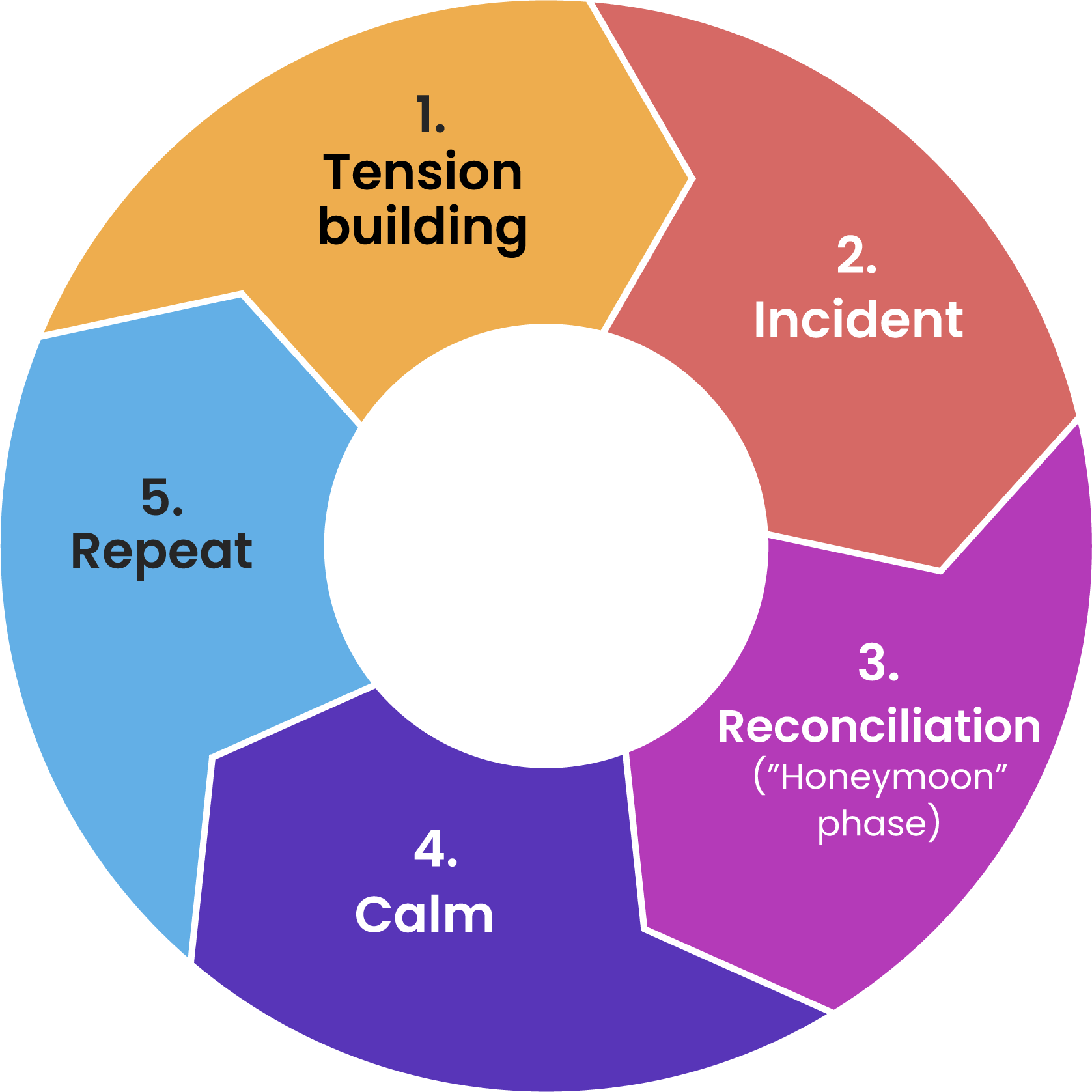
The reconciliation phase is important to understand: the good moments are genuine and real. That's a big part of why people stay, and why people on the outside don't understand.
Over time, the cycle usually speeds up. The calm phases get shorter, and the incidents get worse.
Not every abusive relationship fits this cycle exactly. In some, coercive control is constant and low-level, with no obvious "incident." That doesn't make it any less serious.
How to Show Up For Someone
Friends, family, and community members play a meaningful role in whether someone is able to recognize and respond to an unhealthy relationship. Knowing how to show up well is a skill.
Signs someone may be in a difficult relationship:
Withdrawing from friends and activities they used to enjoy.
Making excuses for their partner's behavior.
Seeming anxious, fearful, or like they're always watching what they say.
Skills you can learn:
Stay in touch. Isolation is a tool of abuse. Your continued presence might matter more than you know.
Listen without judgment. Believe what you are hearing.
Avoid ultimatums like "leave or I can't be your friend". These often push people further away, not closer to safety..
State your support plainly: "I'm here. I believe you. I'm not going anywhere."
You can't make decisions for someone else, but staying connected can be genuinely protective, and sometimes life-saving.
Community Awareness Is Prevention
In a small state like Wyoming, LGBTQ+ community networks are tight-knit and precious. They're also places where unhealthy dynamics can hide behind shared identity, social ties, and the pressure not to disrupt the community.
But those same networks are also where prevention happens. When more people in a community can recognize early signs of unhealthy dynamics before they escalate, it becomes harder for harm to take hold and easier for people to get support before things become serious. Pattern recognition is a community skill, not just an individual one.
The goal isn't to turn everyone into a monitor or a gatekeeper. It's to build communities where people feel seen, where unhealthy dynamics get named early, and where showing up for each other is just what we do. That kind of community is one of the most powerful prevention tools we have.
Healthy Relationships Are Something We Build Together
You've covered a lot of ground in this series. You started with what healthy relationships look like and why they matter. You built real skills for communication, limits, conflict repair, and showing up for others. You learned what abuse looks like across the full spectrum, including the forms that are specific to LGBTQ+ lives, and you developed the pattern recognition to catch when something is shifting, in your own relationships and in those around you.
None of that happens in isolation. Healthy relationships are not just something individuals achieve. They are something communities create together, over time, through the choices we make about how we treat each other.
In Wyoming's LGBTQ+ communities, that means choosing respect over contempt, accountability over avoidance, affirmation over silence, and connection over isolation. It means building communities where people feel valued, supported, and able to participate without fear of exclusion or mistreatment. It means respecting personal boundaries, communicating with honesty and care, protecting people's ability to make their own decisions about when and how to share personal information, and staying connected even when things are hard."
That is what prevention looks like. Not a single conversation or a single module, but a culture, built relationship by relationship, choice by choice, over time.
You are part of building it.
Reflect
Is there a relationship, either past or present, yours or someone else's, where you're seeing something differently after this module?